


The Grade 1 Fatty Liver Myth: Why “Everyone Has It” is the Most Dangerous Lie You’ve Been Told
Meera sat in a crowded café in Baner, staring at her latest health report while her friend, Neha, sipped a latte. The words “Grade 1 Fatty Liver” seemed to pulse on the paper in a threatening bold font.
“Don’t stress about that, Meera,” Neha said with a casual wave of her hand, barely looking up from her phone. “In Pune, everyone has a fatty liver. It’s basically a rite of passage for anyone working a desk job or living past thirty. It’s totally normal.”
It sounded comforting, didn’t it? It felt like a free pass to ignore the clinical jargon. But as Meera sat there, she felt a nagging sense of betrayal. If it was “normal,” why did she feel so sluggish? Why was her digestion always off?
At Insight Imaging & Bone, Joint & Spine Clinic, we see “The Meera Moment” every single day. We’ve come to realize that the phrase “everyone has it” is the most dangerous lie circulating in our community. It’s a silent trap that turns a reversible condition into a lifelong struggle.
The Silent Evolution: Why “Grade 1” Isn’t “Nothing”
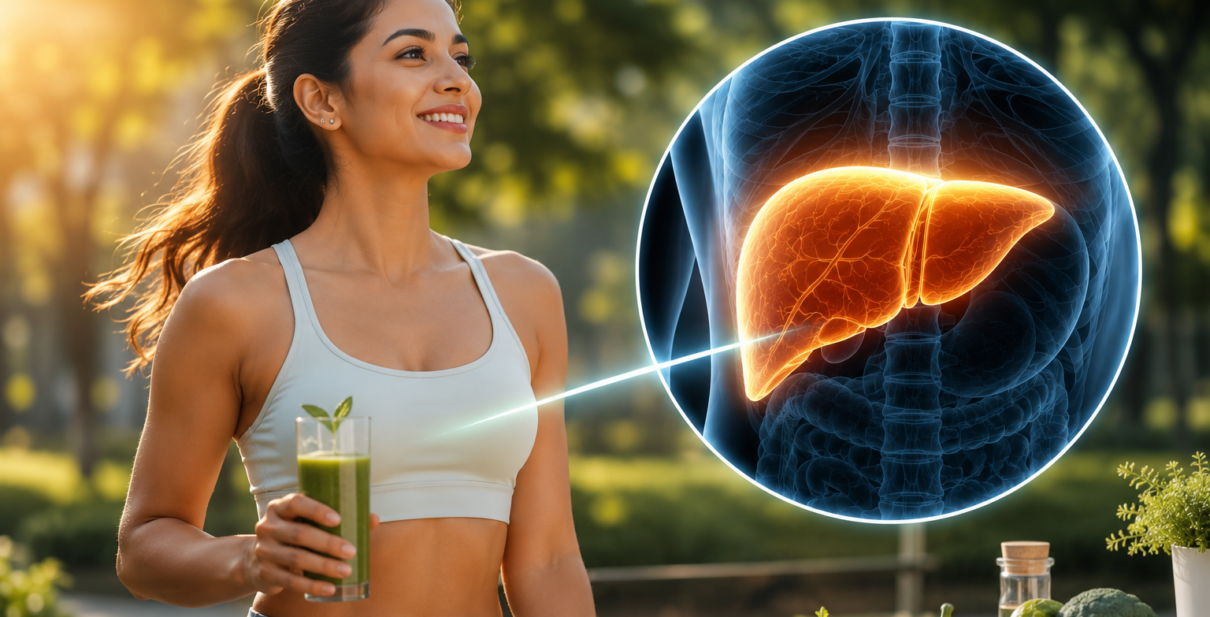
Imagine Meera’s liver is a high-performance filter for her body. A healthy liver is sleek and efficient. When Meera’s report showed Grade 1 Fatty Liver (Non-Alcoholic Fatty Liver Disease), it meant tiny droplets of fat had started to “park” themselves inside her liver cells, like unauthorized cars clogging a narrow lane in Pimpri.The danger isn’t where Meera is now; it’s where she is headed. Grade 1 is the only stage that is consistently reversible. By listening to the “everyone has it” myth, Meera was essentially ignoring an oil leak in her car’s engine because “all cars leak a little.” Eventually, that leak leads to inflammation, and inflammation leads to permanent scarring (Cirrhosis). In a city like Pune, where high-calorie “quick bites” are the norm, Grade 1 isn’t a badge of adulthood—it’s a final warning shot.
The Insight Solution:
When Meera finally walked into our clinic in Thergaon, she didn’t just want a report; she wanted a way out. Dr. Snehal Suryawanshi doesn’t just hand over a piece of paper; she provides a roadmap for recovery.
- Precision Scanning: Not all Grade 1 cases are identical. Dr. Snehal used high-resolution Abdominal Sonography to see exactly how the fat was distributed. She checked Meera’s gallbladder and kidneys as well, knowing that fatty liver often has “troublemaker neighbors” like gallstones.
- The Color Doppler Edge: To ensure Meera’s liver wasn’t already struggling with blood flow, Dr. Snehal utilized Color Doppler This gives a level of depth that “discount” clinics simply skip, ensuring Meera knew the exact state of her vascular health.
- A Localized Perspective: Because Dr. Snehal understands the Pune lifestyle—the long Hinjewadi commutes and the specific dietary habits of the region—she was able to explain the report in a way that Meera could actually use to make changes.
The Recovery Roadmap: Key Focus Points
After the scan, Meera didn’t need a miracle; she needed a plan. Here are the recovery keys Dr. Snehal discussed that helped Meera turn her health around:
- The “Non-Gym” Movement Strategy
Meera didn’t have time for a two-hour gym session. Instead, she focused on Active Rest. She started taking the stairs at her office and walking for 15 minutes after her dinner in Wakad. This consistent, low-impact movement signaled her liver to start processing that stored fat.
- The Glycemic Guardrail
Pune is famous for its bakeries, but sugar is the primary fuel for fatty liver. Meera switched her white rice for local millets like Jowar and Bajra. By lowering her sugar intake, she stopped “feeding” the fat in her liver cells.
- The 6-Month Proof
The most vital part of Meera’s recovery was the follow-up. Six months later, Meera returned to Insight Clinic. When Dr. Snehal showed her the new scan, the “Grade 1” was gone. Her liver was sleek and healthy once again. Seeing that visual proof was the ultimate reward for her hard work.
Conclusion: Don’t Let the Myth Win
Meera realized that just because a health issue is common doesn’t mean it’s okay. Your liver is the only organ that can regenerate and heal itself completely if you catch it in time. Don’t let the “everyone has it” lie lull you into inaction. Follow Meera’s lead and get a clear, expert look at your health with Dr. Snehal Suryawanshi.
To get the most accurate picture of your recovery, we now look beyond the standard ultrasound. While a regular scan identifies the presence of fat, a Fibro Scan is the modern gold standard for measuring the health of the tissue.
A Fibro Scan is a non-invasive, painless test that uses “transient elastography” to measure liver stiffness and fat content (CAP score). It tells us exactly how much scarring is present and precisely how “fatty” the liver is. Think of the ultrasound as a photo of the liver, and the Fibro Scan as a deep-dive data report on its structural integrity.
Let’s turn your “Grade 1” back into a “Grade 0.” With the right imaging and a proactive plan, your liver can return to its healthy, vibrant state.
Ready to start your recovery?
Insight Imaging & Bone, Joint & Spine Clinic Expert Care by Dr. Snehal Suryawanshi (Radiologist) Location: 107, B-Square, Barne Corner, Opposite Atithi Pure Veg, Thergaon, Pune.
Contact: 8855871212 / 09511763474